Fastening systems for sandwich panels: inserts, connections and design criteria
Sandwich panels make it possible to create lightweight, rigid structures by combining two outer skins with a low-density core.
Caricamento tempo di lettura... | 29.09.2026Sandwich panels make it possible to create lightweight, rigid structures by combining two outer skins with a low-density core. When a panel needs to be attached to a frame, a support or another component, this particular construction calls for fastening systems suited to composite materials and lightweight structures.
The available solutions are not interchangeable. Depending on the panel configuration, threaded inserts, direct fastening or specific machining operations prepared during component production may be used. The choice depends primarily on the type of core, the skins, the available thickness and the way the panel will be assembled.
Why fastening a sandwich panel differs from fastening a solid sheet
In a solid sheet, the material is continuous through the thickness, so the fastener can engage directly with the material surrounding the hole.
A sandwich panel has a different construction: the outer skins are separated by a lightweight core, which may, for example, consist of a honeycomb structure or a foam. The fastening point therefore involves materials with different properties and functions within the same component.
For this reason, dedicated solutions have been developed to create anchoring points within sandwich structures while retaining the weight advantage of the panel.
Our collaboration with Specialinsert
For fastening systems intended for sandwich panels with a honeycomb core, we work with Specialinsert, a company specialising in the design and manufacture of fastening systems.
Among the available solutions, we have approved the DEFORM-NUT® TC/SC/1 system for our honeycomb panels. Specialinsert developed and manufactures it specifically for use in sandwich panels. The TC/SC/1® is a deformable tubular threaded insert with a knurled body and an extra-short design. It is made of stainless steel and is available with a cylindrical or countersunk head.
Its short length is particularly useful in sandwich structures, where the fastening point must fit within a limited panel thickness without requiring a deep anchoring element.
How the TC/SC/1® insert works
The TC/SC/1® is installed in a hole prepared in the panel beforehand. During installation, the body of the insert is mechanically deformed. This deformation secures the insert, while the internal thread remains available for subsequent attachment with a screw. This creates a threaded fastening point integrated into the panel and ready for use when the finished component is assembled. This principle distinguishes the insert from a simple through-fastener: the threaded point is prepared in the panel itself and remains part of the component.
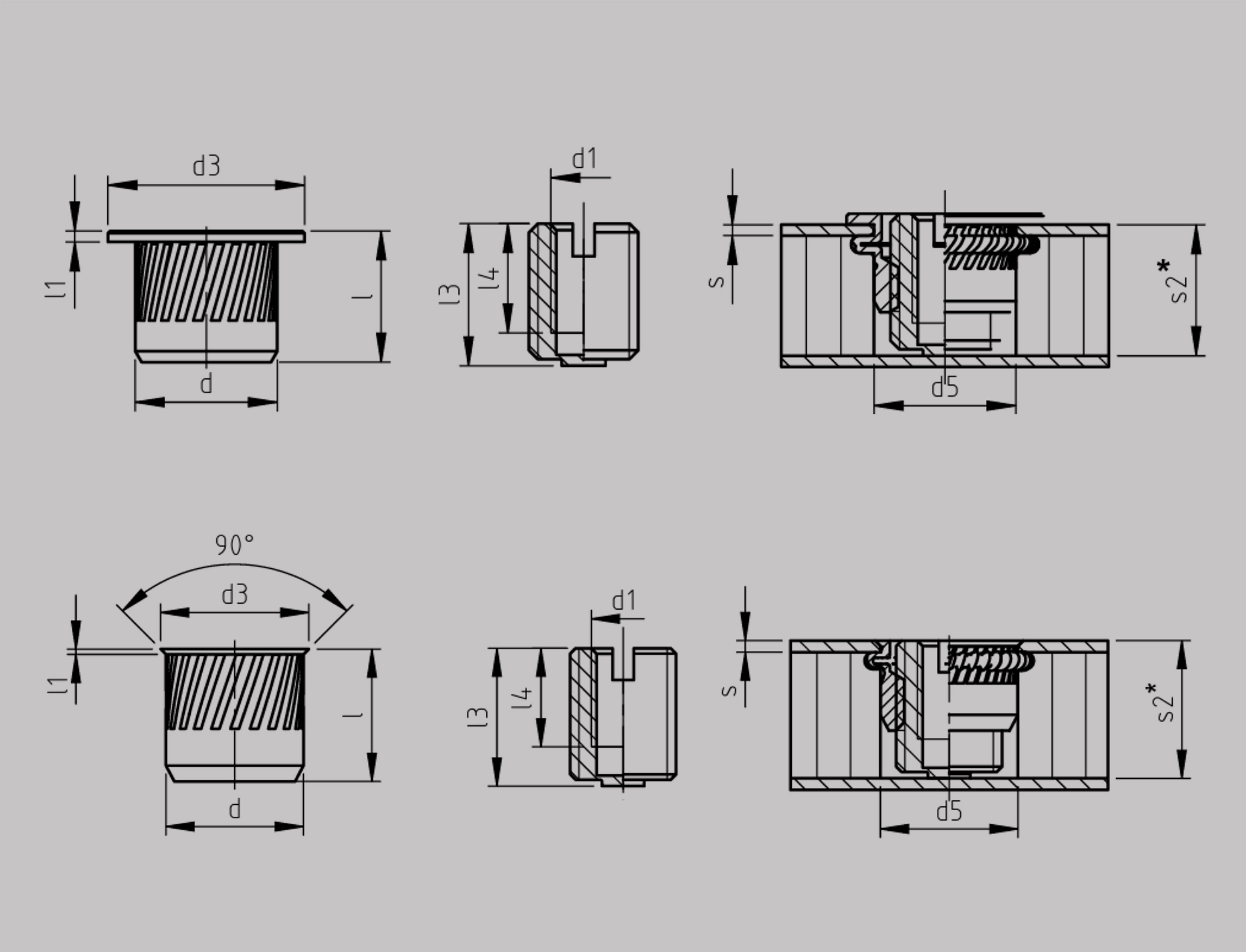
Cylindrical and countersunk heads
The TC/SC/1® is available with two head configurations: cylindrical and countersunk. With the cylindrical version, the head of the insert rests on the outer surface of the panel. The countersunk version allows the insert to sit deeper in the surface, reducing its projection beyond the skin. The choice therefore also depends on the required appearance of the fastening area after assembly and the space available for integrating the insert.
The hole is not the same for every configuration
Installing the insert requires its seat to be prepared in the panel in advance. The geometry of this machining operation must match the selected insert configuration, particularly when changing from a cylindrical to a countersunk head. The seat can be produced as part of our CNC machining, together with the other operations specified in the component drawing. Holes, any required countersinking, milling and other assembly features can therefore be completed before the panel is delivered, rather than leaving these operations for later assembly stages.
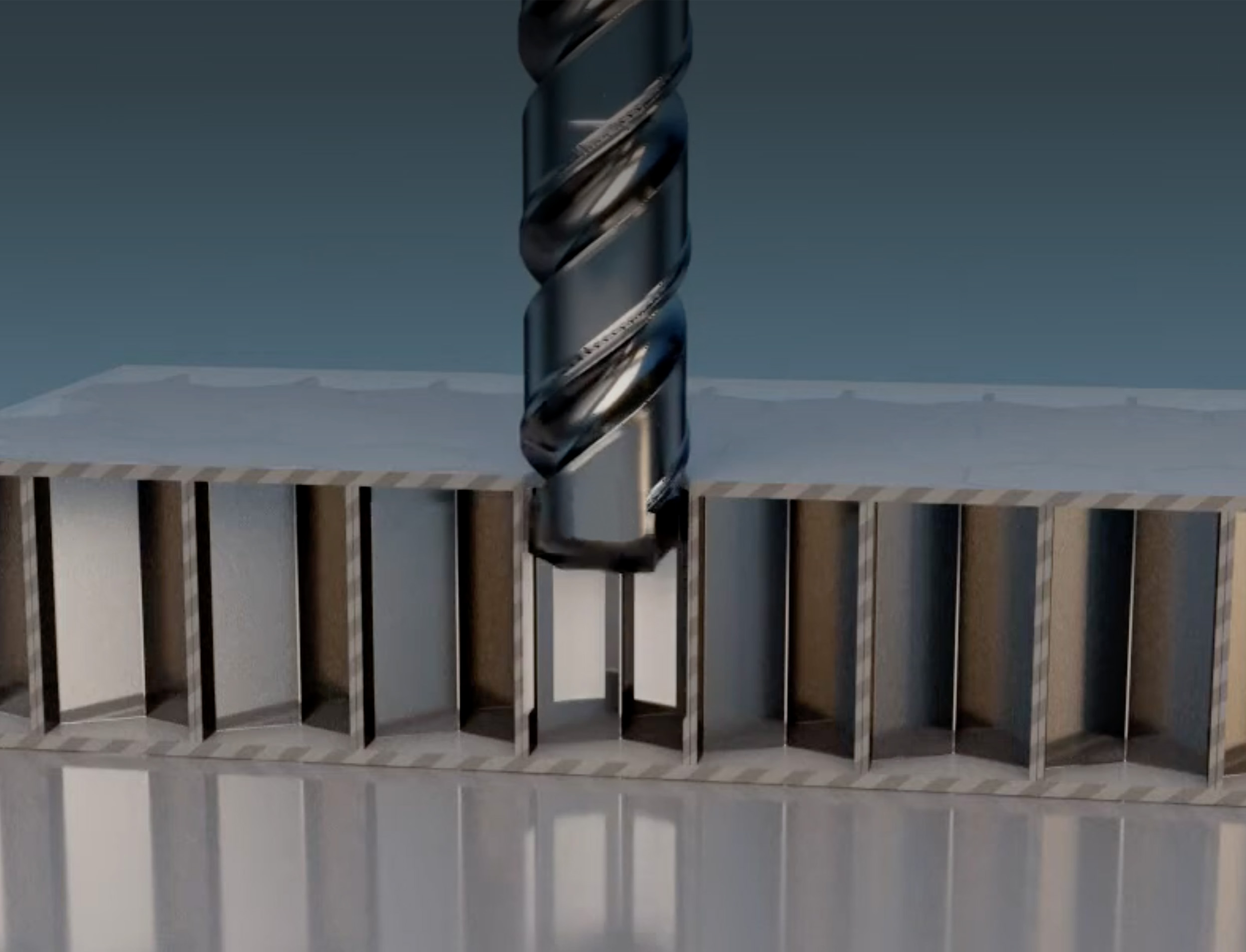

TC/SC/1® and honeycomb-core panels
The TC/SC/1® is a solution we use for our honeycomb-core sandwich panels. Our range includes various honeycomb-panel configurations in which the core can be combined with different types of skins. Integrating the fastening system adds a threaded point to the panel, ready for subsequent assembly. Starting with the panel and supplying a machined component with the required fastening points already in place is particularly useful when the anchor positions have been specified in the design drawing.
When an insert may not be necessary: the PETSTEP example
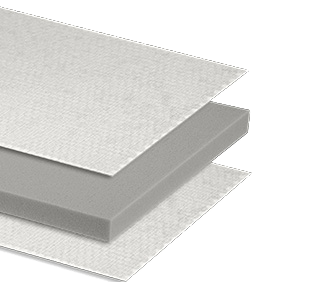
Inserts are not the only way to create a fastening point in a sandwich panel.
A different example is PETSTEP, our panel with epoxy-impregnated glass-fibre skins and a PET foam core. PETSTEP can be manufactured with different core densities and, depending on the density selected, the foam may allow direct fastening. In these configurations, the need for inserts or more complex anchoring systems can therefore be reduced.
This is an important difference compared with a honeycomb panel: changing the nature and density of the core also changes how the panel can be connected to other components.
Integrating fasteners into panel machining
When we produce a panel to a customer's drawing, the fastening system can be integrated during the same stages in which the component's other machining operations are defined. We can therefore start from the geometry required by the project and carry out the machining needed to prepare anchoring points in the specified positions. This approach combines CNC machining and fastening systems within a single component, instead of treating the panel as a simple sheet to be modified later. Defining the fastening positions in advance is particularly useful for repeat production: the seats can be machined to the supplied drawing and replicated across the components in the same series.
Inserts or direct fastening: two solutions for different needs
The choice between an insert and direct fastening depends first and foremost on the panel construction. For our honeycomb panels, we can use a dedicated system such as the Specialinsert TC/SC/1®, which creates a threaded fastening point within the sandwich structure. With some foam-core panels, such as PETSTEP in configurations with a suitable density, direct fastening is possible, simplifying the anchoring system. The aim is therefore to use the panel's properties to obtain the type of connection required by the project, rather than to identify a universal fastening solution.
From standard panel to component ready for assembly
Our ability to perform CNC machining and integrate fastening systems means that we can supply not only standard-size sandwich panels, but also components prepared for subsequent assembly. Depending on the project, we can produce the geometries specified in the drawing, prepare fastening seats and integrate dedicated systems such as the TC/SC/1®. Where the core configuration allows it, we can instead use direct fastening solutions. The fastening system thus becomes one of the features through which a sandwich panel is transformed into the component required for its final application.
Our technical team supports the selection of the most suitable material, integrating mechanical, production, and regulatory requirements.
Contact us
Related articles

Sandwich panels: what they are and where they are used

Reverberation control in indoor environments: acoustic principles and technical solutions for contemporary architecture

Carbon fibre sandwich panels: materials, configurations and high-performance applications
Resources & Contacts
Looking for more information or technical advice on the most suitable panel for your project?